Topology and Geometry

Mar 21 Thu
4:00pm - 6:00pm @ UTS, Syndey

Workshop


UTS-ISF-Workshop Invite

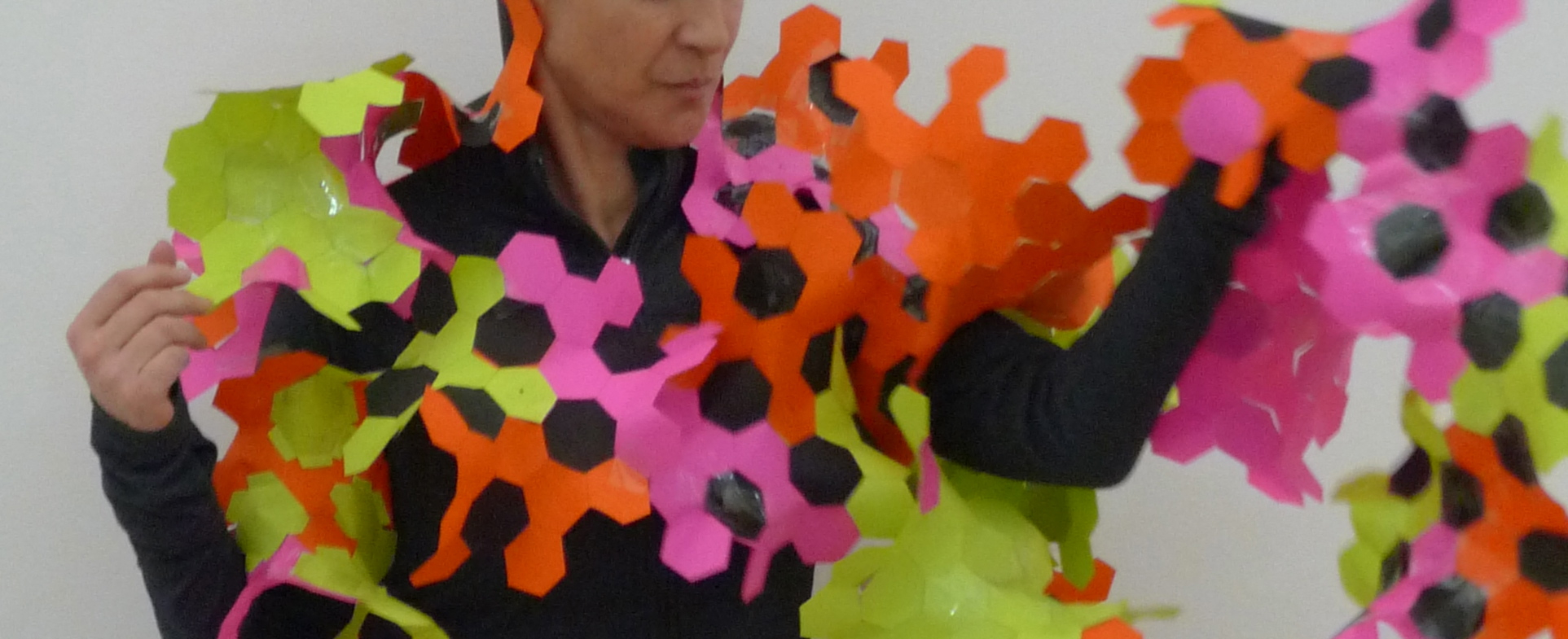
Hyperbolic boa - radical crop

Hyperbolic surface made from paper, constructed from an original pattern by Keith Henderson. Photo: IFF Archive.

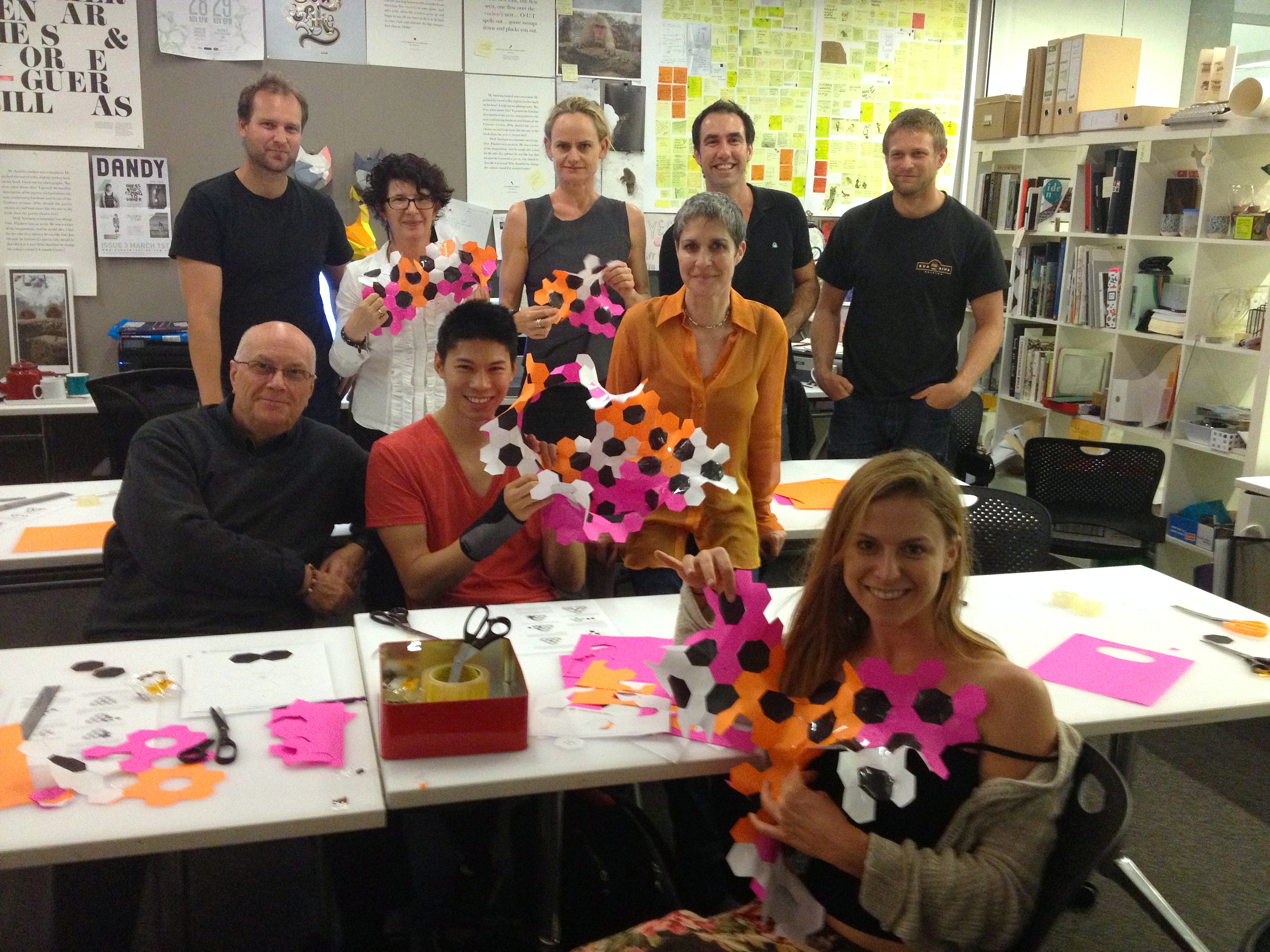
On Thursday March 21, 2013, the IFF teams up with the Institute For Sustainable Futures at the University of Technology Sydney. Margaret will present a workshop from the IFF’s Making Space series looking at the foundations of Geometry and Topology. During the workshop, participants will collectively build a hyperbolic surface out of paper.

The Institute for Sustainable Futures is a flagship research institute of the University of Technology, Sydney. Established in 1996, the ISF’s mission is to create change towards sustainable futures through independent, project-based research.

WORKSHOP PHOTO

Students and staff at the Institute for Sustainable Futures, at UTS, with their hyperbolic surfaces. March 2013.

Students and staff at the Institute for Sustainable Futures, at UTS, with their hyperbolic surfaces. Photo by Tania Leimbach. March 2013.


Making Space for Children

Apr 13 Sat
3:00pm - 6:00pm @ the IFF

Workshop


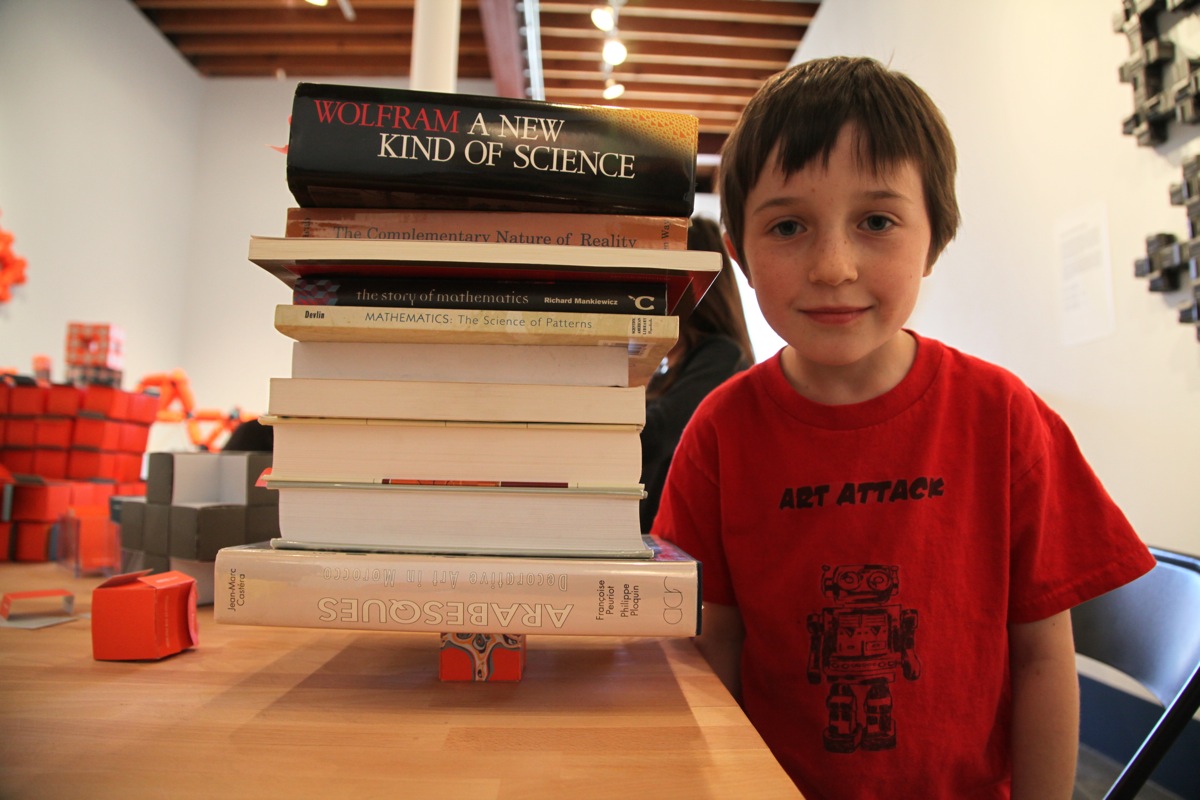
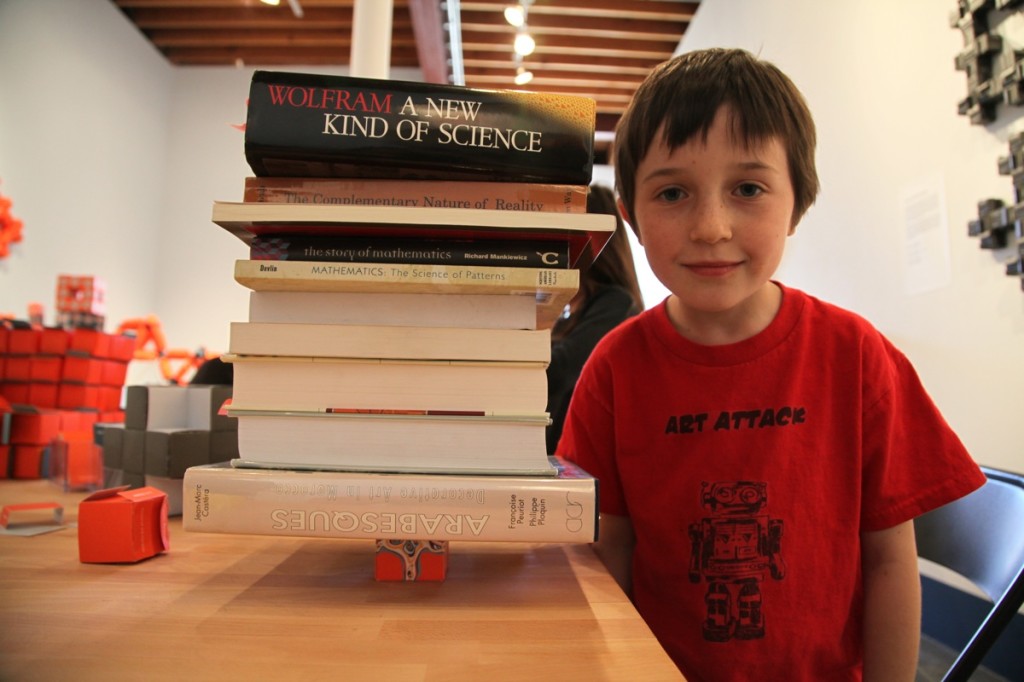
IMG_0025We invite young people between the ages of 4 and 17 years old to make some space with us at the IFF. During this playful workshop we will explore  fractals and origami, deconstruct a Business Card Cube and attempt to put it back together, test the strength of folded paper using the weight of stacked books, work in a team to construct a modular origami sculpture, and experiment with methods of folding and connecting business cards on our own.

This workshop is $15 each for children and the adults accompanying them; however, no one will be turned away due to lack of funds. Get your ticket here: http://makingspaceforchildren.eventbrite.com/#.

All workshop materials will be supplied by the IFF. Direct any questions to mail@theiff.org.

Workshop facilitator Christina Simons is a recent BFA graduate of the California Institute of the Arts, a Jack Kent Cooke Scholar, and a burgeoning native of Los Angeles County. Before pursuing art and photography in California, Christina spent over ten years working in the fields of education and community outreach in New York and Illinois. She has worked with several organizations whose focus is on community development and youth empowerment, including: Cornell University Cooperative Extension, AmeriCorps, the YMCA, Brehm School, and the CalArts Community Arts Partnership. She’s taught programming for at-risk youth, community building and youth leadership, early agricultural education, photography workshops, rock climbing, swimming, kayaking AND gymnastics… just to name a few. If you get a chance to chat with her, you might be tempted to ask: Which farm animal is the most difficult to bring to a library? How do you make homemade stereo cards? And, how do you turn a pizza box into a solar oven?
We Are All Corals Now

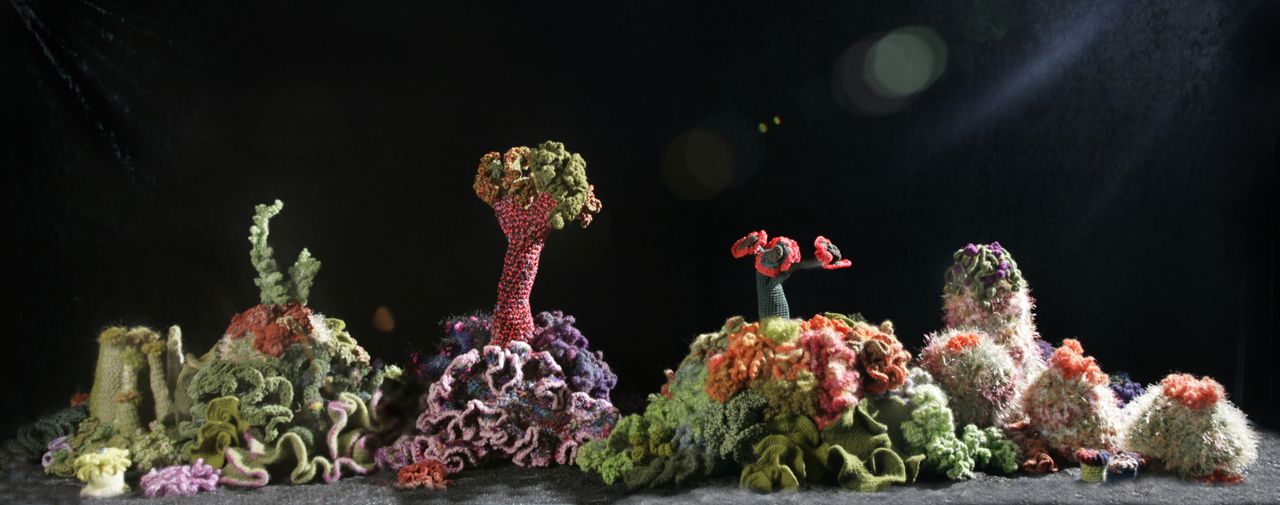
Crochet Coral Reef forest.

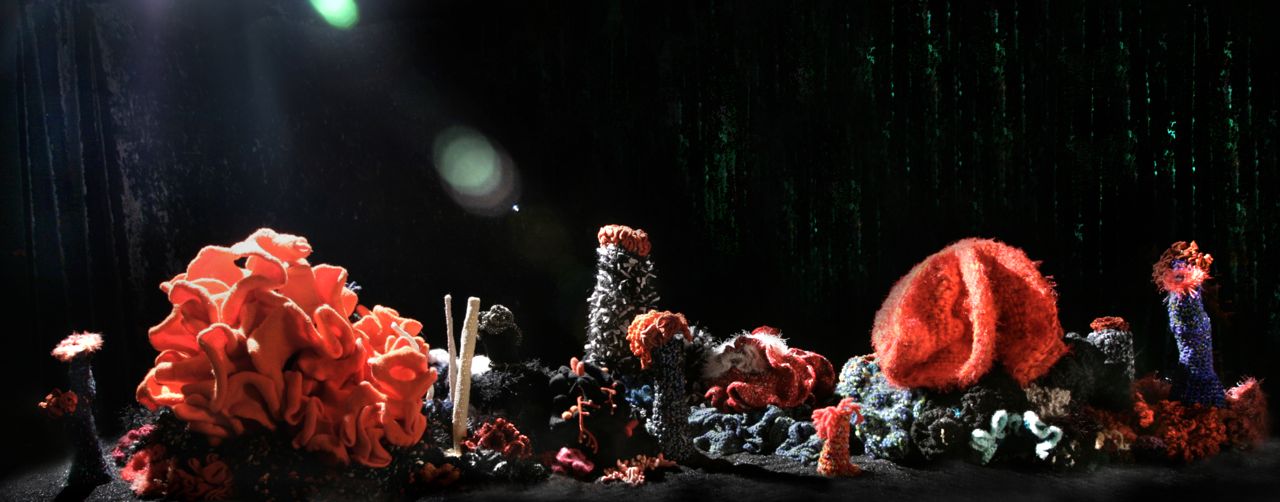
Crochet Coral Reef forest.

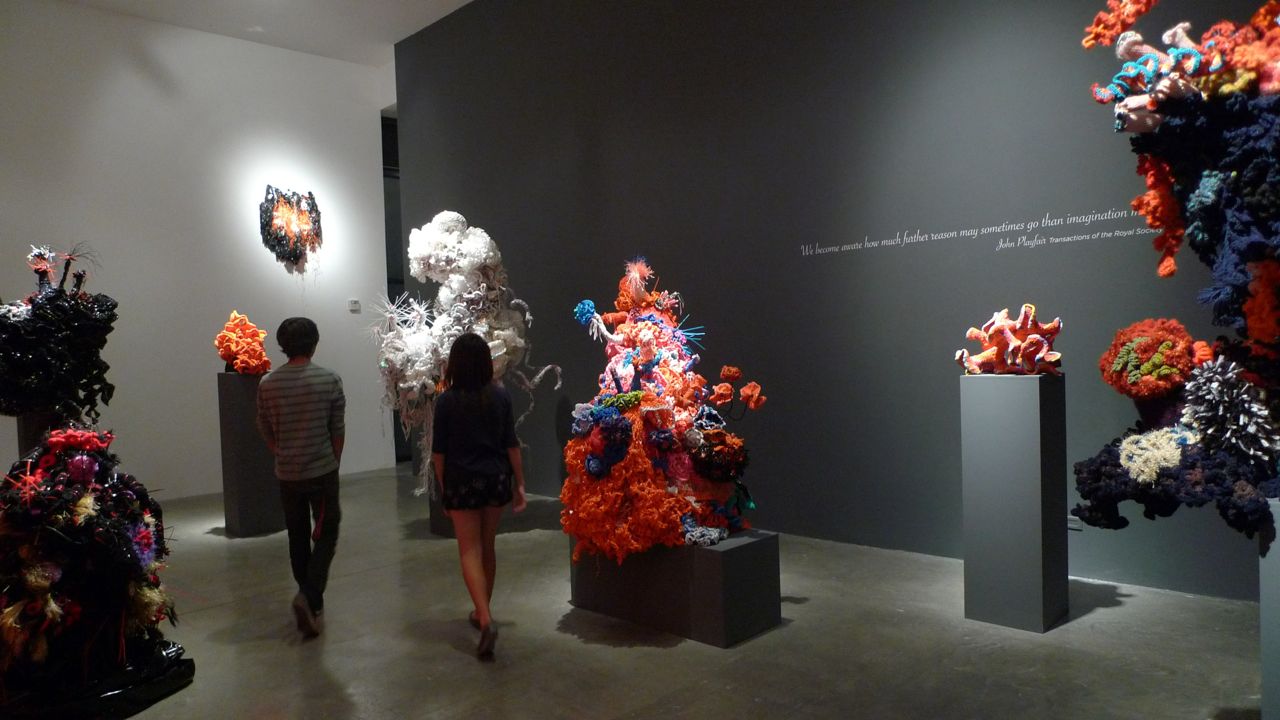
On Monday March 18, IFF Director Margaret Wertheim will present the 2013 Templeton Lecture at the University of Sydney. Margaret’s talk “We Are All Corals Now” will discuss the IFF’s Crochet Coral Reef project as a metaphor for human action in the face of global warming.

We Are All Corals Now

Mar 18 Mon
6:30pm @ University of Sydney, Eastern Ave. Auditorium

Templeton Lecture


Crochet Coral Reef.

Crochet Coral Reef

On Monday March 18, IFF Director Margaret Wertheim will present the 2013 Templeton Lecture at the University of Sydney. Hosted by the Center for the Human Aspects of Science and Technology (CHAST), the Templeton Lecture was endowed by Professor Charles Birch, the influential Australian biologist who pioneered the subject of environmental philosophy, for which he was the awarded the 1990 Templeton PrizeMargaret’s lecture – We Are All Corals Now” – will discuss the IFF’s Crochet Coral Reef project as a metaphor for thinking about human action in the age of global warming.

Crochet Coral Reef.

Crochet Coral Reef

WE ARE ALL CORALS NOW: A meditation on art, science and collectivity in the age of global warming
 
                In an age of climate-change denial, humanity urgently needs positive ways to help us face up to global warming.  No ecosystems are more vulnerable than coral reefs, and in these fragile marvels we may find a metaphor for hope. Coral reefs are made up from millions of tiny coral polyps. Each polyp is insignificant on its own, yet when acting together these minute creatures collectively produce the spectacle of the Great Barrier Reef, the only organism that can be seen from outer space.
                 In 2005, sisters Christine and Margaret Wertheim began to crochet a coral reef. Inspired by the action of living reefs, they  envisioned their project as a collaborative endeavor that would fuse environmentalism, marine science, handicraft and community art practice. Today the Crochet Coral Reef is perhaps the largest art + science endeavor on the planet. More than 25 reefs have been made around the world, including in Chicago, New York, London, Melbourne, Latvia and Germany. Tens of thousands of people have helped to make these reefs. More than 3 million visitors have seen the resulting exhibitions. The project has been called, “the AIDS quilt of global warming.”
               Within the framework of the Crochet Reef project, people are invited into an endeavor that mimics the process of nature itself. Through participatory experience, a profound lesson is conveyed: While none of us as individuals can solve the problem of global warming, collectively we have the power to sustain a better, healthier world. In this talk Margaret will discuss the Crochet Reef project as a model for thinking through our relationship with nature as we face the most pressing environmental challenge of our time.

Event free and open to the public.

Crochet Coral Reef forest.

Crochet Coral Reef forest

Awesome Bamboo Stick Thing

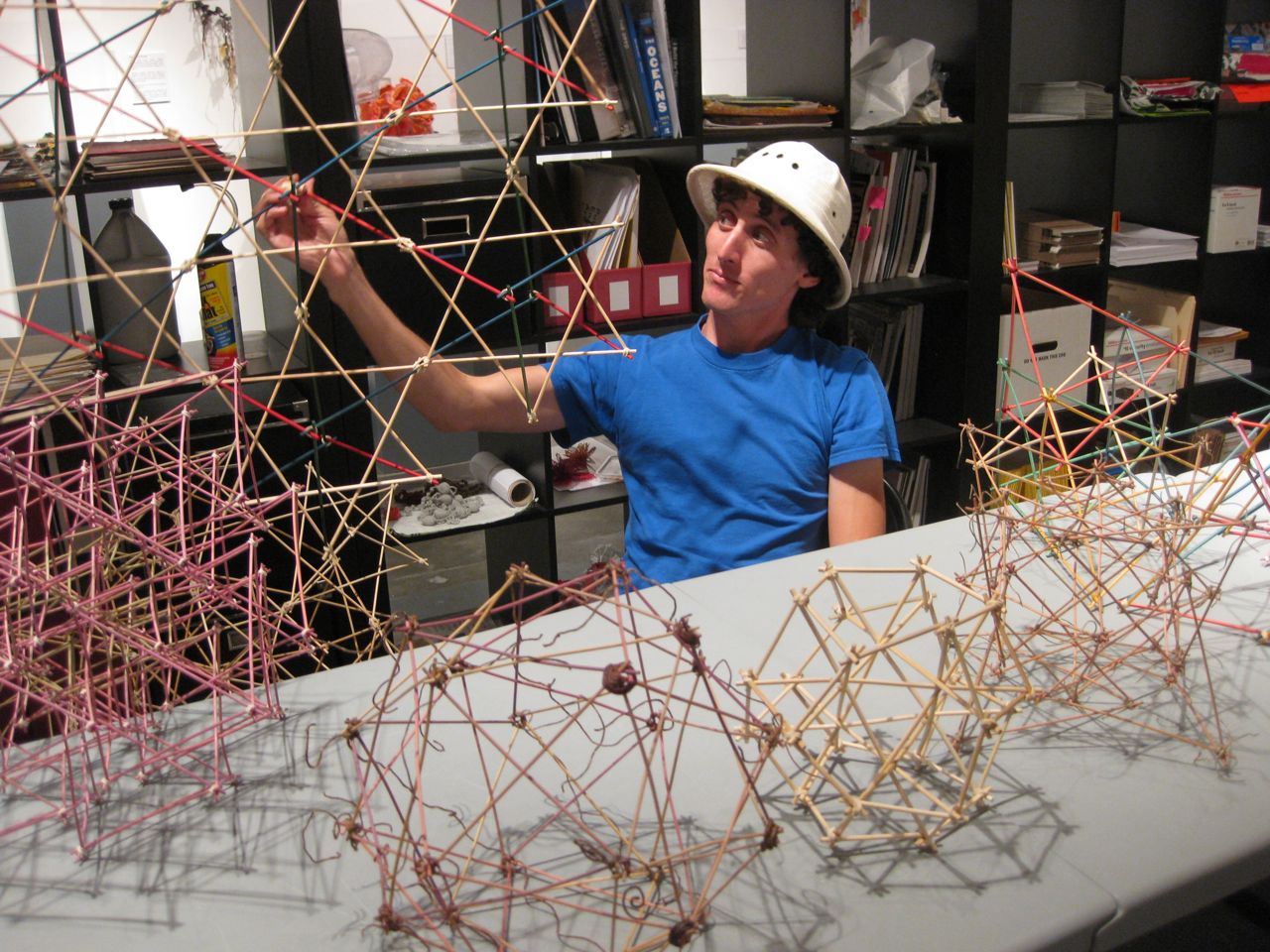
Jack Dotson with giant octahedral structure made from bamboo sticks.

Jake Dotson with giant octahedral structure made from bamboo sticks.

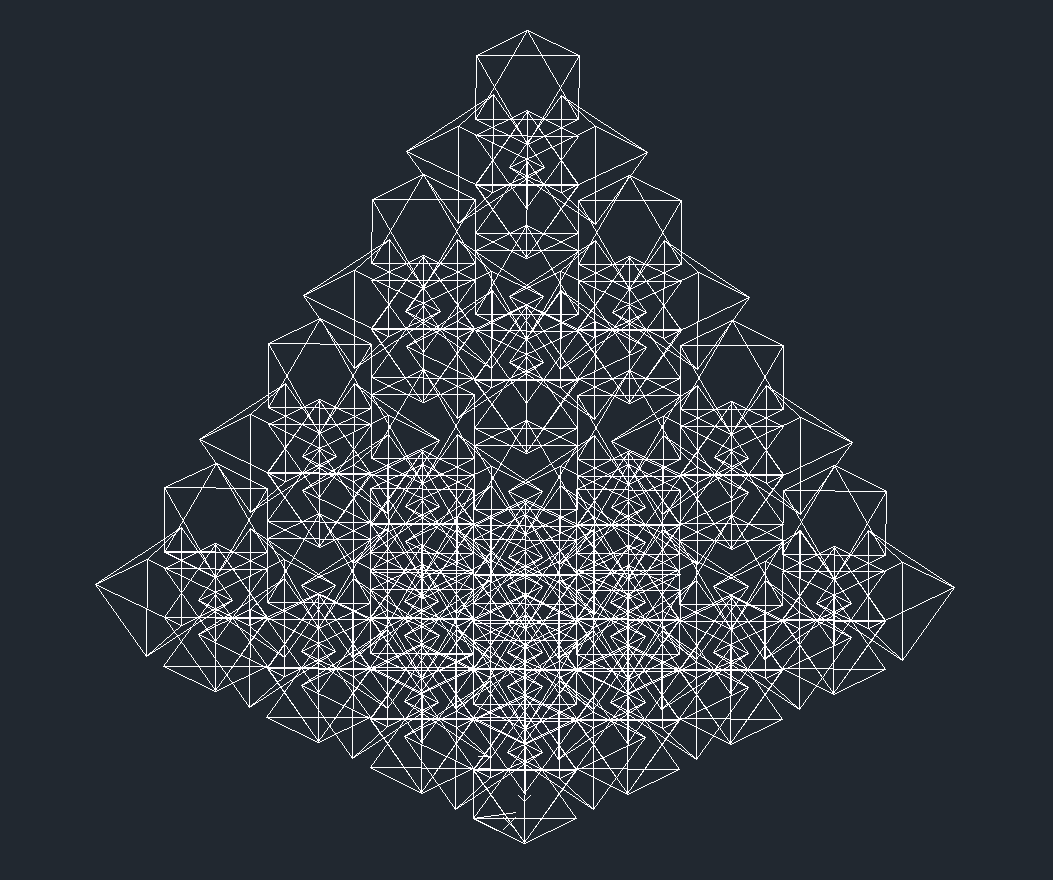
On March 2, “liberation geometer” Jacob Dotson led an IFF workshop on making polyhedral structures from bamboo sticks. Dotson has began work on a giant lattice composed from hundreds of interpenetrating octahedral units. With its factal-like architecture, the finished structure will also have octahedral symmetry. We can’t wait to see the final form.

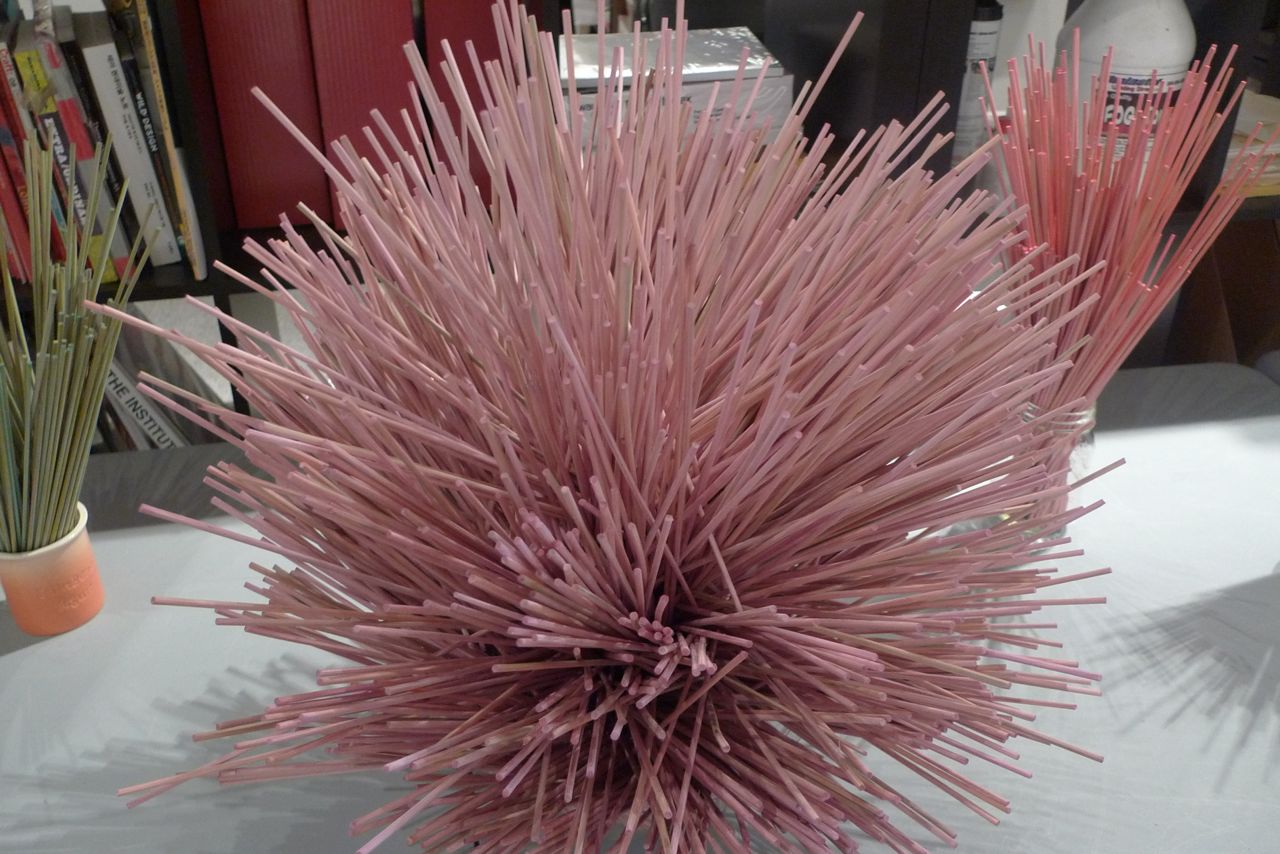
Pink bamboo sticks

Bamboo sticks awaiting construction at the IFF. Dotson dyes the bamboo with food stuffs and other natural resources. This pink was produced by red cabbage.

The Particle at the End of the Universe

Mar 07 Thu
7:30pm @ The IFF

Lecture


558078_10151737252313943_102114436_n

In conjunction with the IFF’s current exhibition making space, we are delighted to present a talk by Caltech cosmologist Sean Carroll on the Higgs boson and the relationship between matter and space.For decades, particle physicists have searched for the elusive Higgs boson, the missing piece to the “Standard Model” that explains the foundations of matter, energy and force in the physical world. In July 2012, scientists at the Large Hadron Collider in Geneva announced that they had found this enigmatic particle, which they believe is responsible for giving matter its mass. In this talk, renowned speaker Sean Carroll will explain what the Higgs boson means; why it – quite literally – matters; and how, in contemporary physics, matter is ultimately a byproduct of space itself.

Sean Carroll is a physicist at the Moore Center for Theoretical Cosmology and Physics at the California Institute of Technology. An expert on dark matter, Carroll lectures widely about contemporary physics at universities and colleges the world over. Carroll is the author of From Eternity to Here, a book about physicists’ understanding of time, and The Particle at the End of the Universe: The Hunt for the Higgs Boson and the Future of Physics, on which his IFF talk is based. He is currently working with PBS’s NOVA on a documentary version of the book. Carroll blogs about physics at his widely-read and well-respected site, Preposterous Universe.

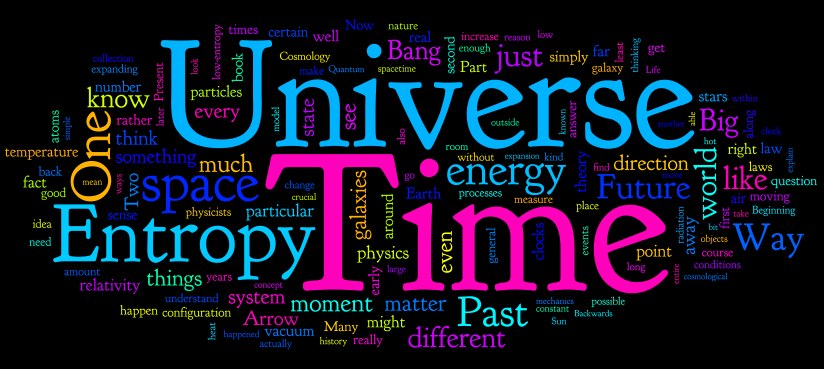
Image by Sean Carroll.

Chinese New Year

Feb 16 Sat
Regular Hours @ The IFF

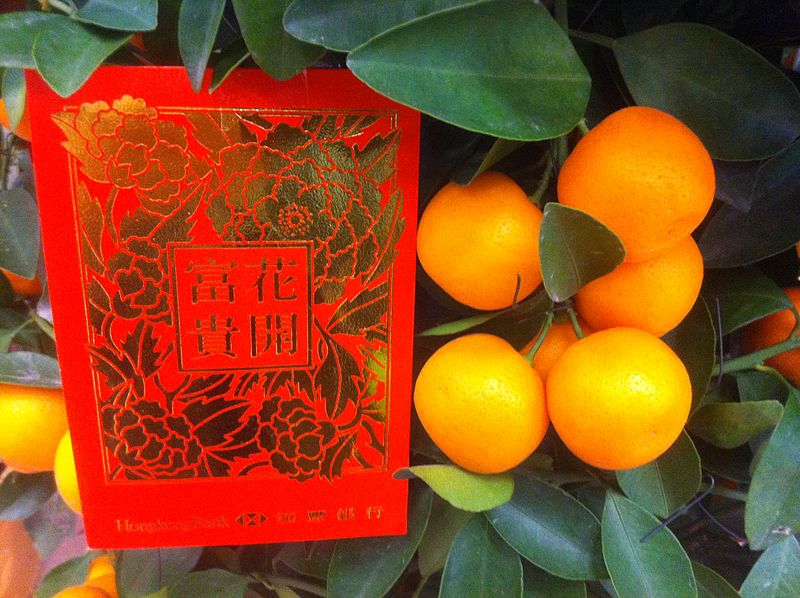
800px-HK_石塘咀市政大廈_Shek_Tong_Tsui_Municipal_Services_Building_匯豐銀行_HSBC_red_Lai_See_農曆新年_Luna_New_Year_decoration_Jan-2012

Happy Year of the Snake! This weekend the Institute will be open our regular hours, Saturday 12noon – 6:30pm. Feel free to come by and check out making space and fold some business cards. Please note that due to the extensive neighborhood festivities planned for Saturday, several streets in Chinatown will be closed. Plan on parking a little further away than usual.

Visit the Golden Dragon Parade website for more information on the New Year celebration.

STREET CLOSURES
Parade Route: Saturday, February 16: The following streets will be closed starting from 11:00am to 3:30pm

• Hill Street from Bernard Street to Temple Street
• Ord Street from North Broadway to Hill Street
• Bernard Street from North Broadway to Hill Street
• North Broadway from Bernard Street to Cesar Chavez Avenue
• Cesar Chavez Avenue from North Broadway to Main Street

Happy Valentine’s Day

Tracy HeartOne of our very talented making space contributors, Tracy Tynan, folded this beautiful camouflage specimen in honor of today’s heart holiday. We ♥ Tracy!

Bamboo Platonic Solids

Mar 02 Sat
3:00pm - 6:00pm @ The IFF

Workshop


Jake B

For the past several years Jake Dotson has been developing ways to make structural frames from simple materials in order to make architecture more accessible to individuals, more independent of industry, more open to the natural world, and more pleasurable to build and inhabit. He models these crystalline networks out of bamboo sticks tied together with twine and rubber bands. From these humble tools Dotson weaves matrixes of tetrahedrons, octahedrons, cubes, and other regular polyhedra into elegant lattice-like configurations that resemble three-dimensional spider webs. Join us for a one-off workshop to learn how to make these beautiful and surprising structures. Workshop participants have the opportunity to contribute to a sculpture that will hang in the IFF’s making space exhibition. All builders will be credited on the resulting piece.

A $10 donation at the door is encouraged; however, no one will be turned away. Construction materials will be supplied. RSVP to mail@theiff.org recommended.

Jake Dotson describes himself as a Liberation Geometer. His work is informed by a lifetime spent in humanistic education, as a student as well as a teacher. His design practice developed through his ten-year apprenticeship with Culver City architect Gregg Fleishman. Of his bamboo structures he writes: They are really like crystalline springs! They strongly resemble tensegrity structures, and could be considered as the grandchildren of tensegrities in the way that they define geometric load circuits and utilize tension to maintain a form, but they are different; tensegrities are traditionally made from two completely different kinds of parts – struts and cables- serving as compression and tension members respectively, and exclusively. In my structures, all the parts are composed of a uniform elastic material (ideally bamboo) which are woven into 3D circuits, with each serving to carry compression or tension loads as needed. Sometimes I think of this as similar to the difference between AC and DC electric current.

bodhidharma thangka2