 |
||||
|
 |
|
|
|
To Figure: To form or shape, to trace, to reckon or calculate, to represent in a diagram or picture, to ornament or adorn with a design or pattern. // // //
|
About the Institute For Figuring |
|||
 |
||||
|
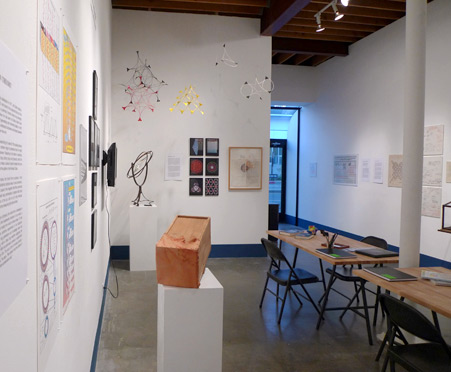
The mission of the Institute For Figuring is to contribute to the public understanding of scientific and mathematical themes through innovative programming that includes exhibitions, lectures, workshops, and participatory, community based projects. The IFF is a 501(c)(3) nonprofit organization. Founded in 2003, the IFF has developed exhibits and programs for museums, galleries, colleges, and community groups around the world. We have worked with: the Andy Warhol Museum (Pittsburgh), The Hayward (London), the Science Gallery (Dublin), the New Children’s Museum (San Diego), Art Center College of Design (Pasadena), the Museum of Jurassic Technology (Los Angeles), and the Smithsonian’s National Museum of Natural History. The Institute’s Crochet Coral Reef is now one of the largest science + art projects in the world. At the core of the IFF’s work is the concept of material play. We believe that ideas usually presented in abstract terms can often be embodied in physical activities that engage audiences via kindergarten-like practices. Through activities such as cutting and folding paper, we affirm that the hands and eyes can serve as guides to developing the human mind. By inviting our audience to literally play with ideas, the IFF offers a new, hands-on approach to public science education that is at once intellectually rigorous, pedagogically rich, and aesthetically aware. |
||||
| © 2003–2018 The Institute For Figuring | ||||
