Great Barrier Reef in danger, says UNESCO

1480826820545

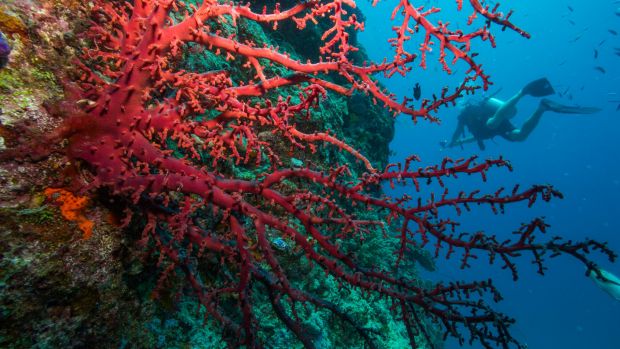
UNESCO has threatened to list the Great Barrier Reef, as a “World Heritage in Danger” unless Australia cleans up its act and works harder to save this ecological treasure. On Friday the Australian government filed a report on what it’s doing, which coral reef scientists have declared inadequate. Tragically, the government’s plan of action, outlined in its Reef 2050 Plan, is silent about global warming. Moreover the Queensland government is pushing ahead with plans to build a vast port to ship coal in the middle of the GBR and Oz is showing little sign of meeting its CO2 target emissions to ensure world temperatures don’t rise by more than 2˚C, a must if reefs are to survive. Shame on my native land!

Here you can see footage of a helicopter flyover above dozens of GBR rub-reefs devastated by massive coral bleaching this year.

Photo by Jason South.


Heritage Society – University of Melbourne

Nov 17 Thu
12:00 noon - 2:30pm @ University House, UniMelb

Lunchtime Lecture


On Thursday November 17, 2016, IFF director Margaret Wertheim will give a lecture for the annual Heritage Society Lunch at the University of Melbourne. Wertheim’s topic will be the importance and value of intersections between art and science and the ways in which she has been exploring the nexus of these fields in her work.

The lunch is hosted by the Heritage Society, a group of Melbourne University alumni who have made bequests to the university.

Pdf of event program.


Two Cultures – Melbourne University

Nov 14 Mon
10:00am-3:30pm @ Sidney Meyer Asia Center, UniMelb

Art+Science Forum


TWO CULTURES: A forum on global cultural collaborations with art and science, is a forum jointly hosted by the Carlton Connect Initiative of the University of Melbourne, and Asialink Arts, an organization that creates and presents contemporary Australian art in Asia.

During this day-long event, artists, scientists, curators and policy makers come together to focus on sharing ideas and experiences that interrogate the role of art in science.

The keynote address will be given by Margaret Wertheim, artist, curator and director of the Los Angeles-based Institute For Figuring. Ms Wertheim’s presentation “Set Theory: Parsing Possible Relations Between the Sciences and Arts” will consider a variety of ways in which the sciences and arts may intersect, overlap and engage with one another.

Other speakers include forum chair Dr. Renee Beale (Creative Community Animator, Carlton Connect Initiative), Rose Hiscock (Director, Science Gallery Melbourne), Erica Seccombe (Australian National University), Stephen Haley (Victorian College of Arts), Dr. Simon Cropper (Vision Lab, University of Melbourne), plus artists Jesse Stephens and Dean Petersen (Cake Industries), Kit Webster, and Yiyun Chen (SymboticA).

Download Pdf with forum program and speaker resumes.


Date: Monday November 14, 2016

Time: 10am-3:30pm. 

Place: Yasuko Hiroaka Room, Sidney Meyer Asia Center

University of Melbourne.


Best Australian Science Writing 2016

Nov 30 Wed
@ Australia

Book Publication


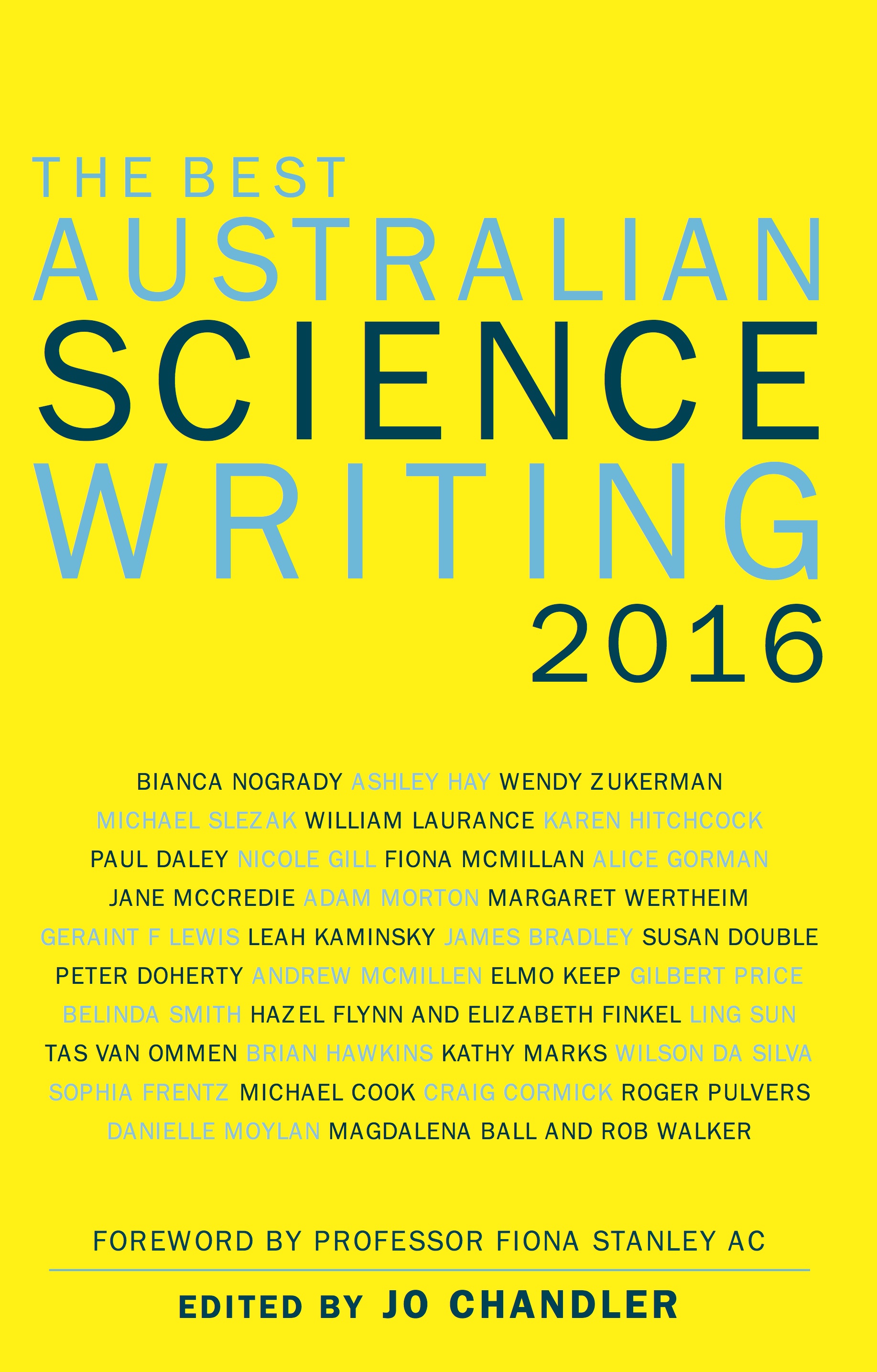
IFF Director Margaret Wertheim’s essay “I Feel Therefore I Am” is included in Best Australian Science Writing 2016. Wertheim’s essay, originally published in Aeon, the acclaimed international online journal of ideas, traces the history of how consciousness came to be conceived as a scientific problem. Tracing the roots of scientific thinking about thinking back to Descartes and Gallieo, the essay embeds the topic of consciousness into a wider story about science’s claims to comprehensively explain the nature of the real.

Best Australian Science Writing 2016, is edited by Jo Chandler, and includes essays by (among others) Biana Nogrady, Leah Kaminsky, Michael Slezak, Elizabeth Finkel, Wilson da Silva, Ashley Hay, and Nobel laureate Peter O’Doherty.

Copies may be purchased  here from New South Press:

9781742235035


2016 Hottest year on record + NZ Radio

image-20161111-25052-ip7u3qIts official says the World Meteorological Organization: 2016 is the hottest year on record, with global temperatures averaging 1.2˚C warmer than the pre-industrial era. Almost everywhere was hotter this year, but the burn wasn’t evenly distributed: the Russian Arctic was an alarming 6˚- 7˚C degrees hotter. Bad news for polar bears. Ocean temperatures are also at an all-time high, causing vast bleaching events across the Great Barrier Reef. Here’s an article in The Conversation on 2016’s relentless rise of global warming.

Also from this week, an interview on Radio New Zealand’s Nights program with IFF Director Margaret Wertheim discussing the Crochet Coral Reef project and its marriage of science and art as a method for engaging audiences about climate change in ways that are powerful, positive and constructive.


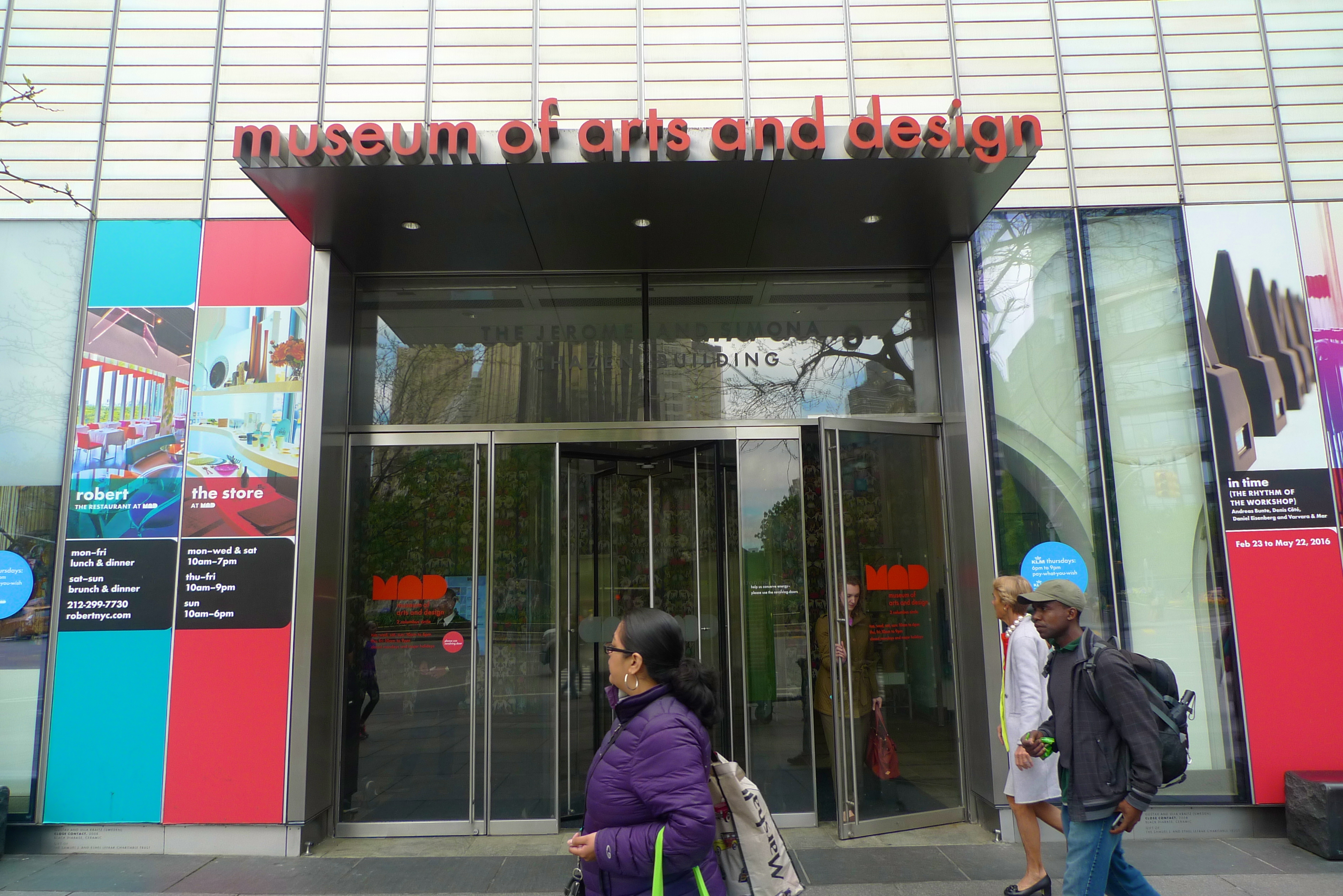
Crochet Coral Reef: TOXIC SEAS opens at MAD, NYC

P1210090

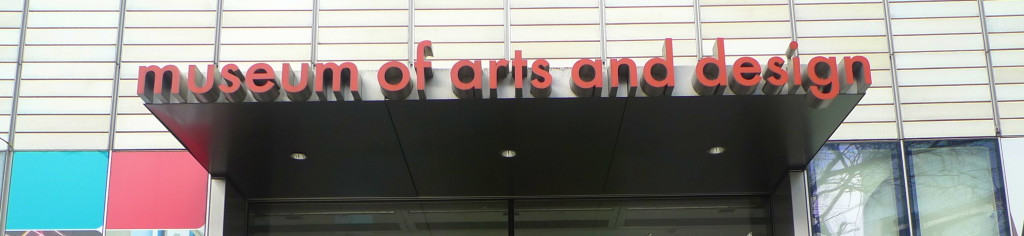
Tonight is the opening party for our new exhibition Crochet Coral Reef: TOXIC SEAS by Margaret and Christine Wertheim and the Institute For Figuring, at the Museum of Arts and Design in NYC. The show is a stunning triumph of handicraft, plastic trash and feminism. More news and gorgeous photos coming soon.


IFF wins the AxS Award for art and science

On September 21, 2016, the Institute For Figuring was awarded the annual art and science, AxS Award by the Pasadena Arts Council. Margaret and Christine Wertheim were delighted to accept this honor, which has previously been granted to such luminaries as JPL’s artist-in-residence Dan Goods, land-artist Lita Albequeque, and Lorne Buchman president of Art Center College of Design.

Awards webpage


Coral reefs may not survive global warming

hgh-res-green reefA decade ago when Margaret and Christine Wertheim started the Crochet Coral Reef project, they joked that if the Great Barrier Reef ever died out, their woolly reef would be something to remember it by. New research compiled by the international agency Climate Analytics warns that most coral reefs won’t survive a 2˚C rise in temperature and the world is now on target to break that limit. If reefs are to make it through, the researchers say, humans need to restrict global warming to no more than 1.5˚C above pre-industrial levels, which would at least allow “some chance for a fraction of the world’s coral reefs to survive.” 1.5˚C is probably an impossible goal, requiring carbon emissions to peak by the end of this decade then radically decline, with a future “carbon budget” of just 250 billion tonnes of CO2. That’s approximately six years worth of our present emissions. This sobering news comes as the IFF is preparing for our Crochet Coral Reef: Toxic Seas exhibition at the Museum of Arts and Design in NY, opening September 15, 2016. The historic photo above was one of the Wertheim’s first handicraft reefs, dating back to 2006, just when scientists were beginning to link reef degradation to climate change.


Physics, religion and South Park

Sometimes things go awry. Especially on South Park. How delightful to see in this Wisecrack video about the representation of religion in South Park, a discussion of IFF director Margaret Wertheim’s book Pythagoras’ Trousers – itself a history of the relationship between physics and religion. Included is an animation of Margaret and South Park creators, Matt Stone and Trey Parker, doing a googly-eyed dance.


Filigrees of Form: A Stitch in Time

Sep 22 Thu
7:00pm @ MAD, NY

Panel Discussion


In conjunction with the IFF’s exhibition Crochet Coral Reef: TOXIC SEAS at the Museum of Arts and Design in NY, please join us for a panel discussion about the acceleration of time, environmental change, and interplays between art, science and nature.
P1210090 - Version 2

Panel: Filigrees of Form: A Stitch in Time

Museum of Arts and Design
Thursday Sept 22, 2016, 7pm
The Theater @ MAD
2 Columbus Circle, NYC, NY 10019
$10 general/ $5 members and students

Program Description
Time is being accelerated as new technologies and biological degradation bring forth rapid alterations in nature—from genetic engineering to tissue culturing, from the incessant depletion of coral reefs and their ecology to botanical farming moving indoors. How can we adjust to these environmental changes? Can we propose a new arcadia, coupled with advances in mathematical models and their projections, or are some of nature’s forms too complex to execute in that manner? Looking at biology as technology, our panel discussion will underscore the sensitivities inherent in forms of living entities and the roles these forms play in knowledge production through art and science.

Panel Moderator:
Suzanne Anker is a visual artist and theorist working at the intersection of art and the biological sciences. She works in a variety of mediums, ranging from digital sculpture and installation to large-scale photography to plants grown under LED lights. Her work has been shown both nationally and internationally, in museums and galleries including the ZKM, Karlsruhe, Germany; Walker Art Center, Minneapolis; Smithsonian Institution, Washington, DC. Ankar has hosted 20 episodes of The Bio-Blurb Show, an Internet radio program originally on WPS1 Art Radio, in collaboration with the Museum of Modern Art, New York. Chairing the School of Visual Arts’ BFA Fine Arts Department in New York City, Anker continues to interweave traditional and experimental media in her department’s new digital initiative and the SVA Bio Art Lab.

Panelists:
Margaret Wertheim is a writer, artist and curator whose work focuses on the intersection of science and the wider cultural landscape. Founder and director of the Institute For Figuring, she and her twin sister Christine Wertheim have created the Crochet Coral Reef project, which has been exhibited at the Hayward Gallery, London; Andy Warhol Museum, Pittsburg; Science Gallery, Dublin; and the Smithsonian’s National Museum of Natural History, Washington, DC. Wertheim’s work with the IFF has been shown at the Walker Art Center and is in the current MASS MoCA exhibition Explode Every Day: An Inquiry into the Phenomenon of Wonder. She has authored six books, including The Pearly Gates of Cyberspace a history of Western concepts of space, and Physics on the Fringe, about the scientific equivalent of “outsider art.”

Joseph DeGiorgis graduated with a Bachelor’s in Oceanography and Marine Ecology from the Florida Institute of Technology and worked as a scuba diver for the Marine Biological Laboratory (MBL) in Woods Hole, Massachusetts. He spent time at the Harbor Branch Oceanographic Institute and at Harvard Medical School before obtaining a PhD in Neuroscience from Brown University. He was a Postdoctoral Fellow at the National Institutes of Health and is now a Professor of Biology at Providence College and Adjunct Faculty in the MBL Cellular Dynamics Program. DeGiorgis teaches bio imaging at the School of Visual Arts, New York.

Frank Gillette is the recipient of numerous awards, including fellowships from the Rockefeller Foundation and the Guggenheim Foundation, and grants from the New York State Council on the Arts and the National Endowment for the Arts. He was artist-in-residence at the American Academy in Rome in 1984–1985. His work has been presented in solo exhibitions at museums and galleries including Contemporary Arts Museum Houston; Corcoran Gallery of Art, Washington, DC; Howard Wise Gallery, New York; Leo Castelli Gallery, New York; and Whitney Museum of American Art, New York. In addition, Gillette’s work has been included in numerous group shows, including at Documenta 6, Kassel, Germany; Museum of Modern Art, New York; Carnegie Museum, Pittsburgh; San Francisco Museum of Modern Art; and the Venice Biennale.