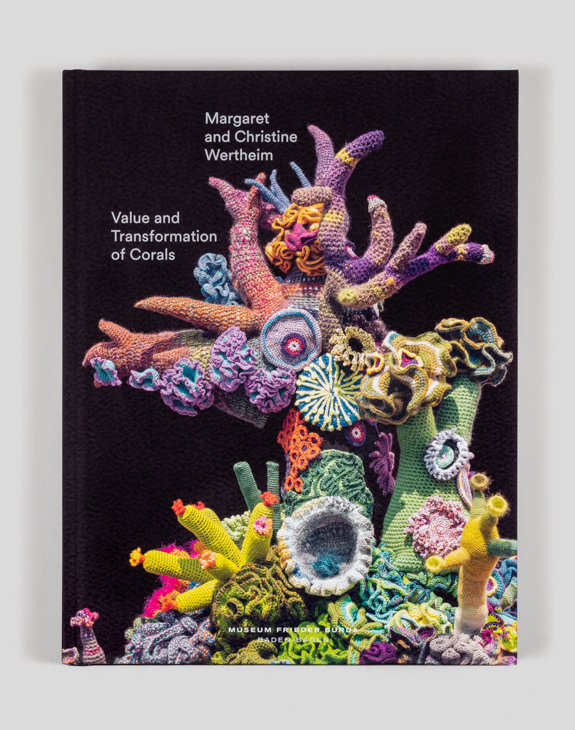
Seeing the Unseeable: Data Design Art
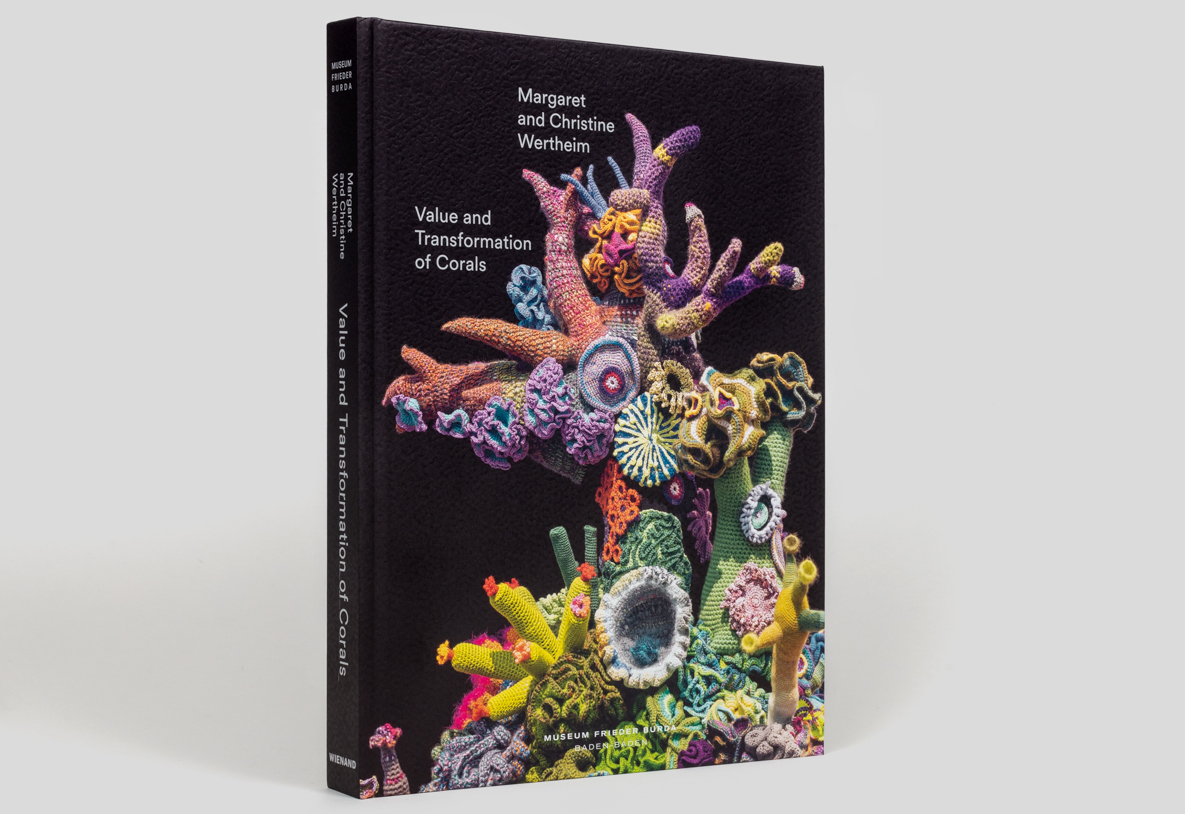
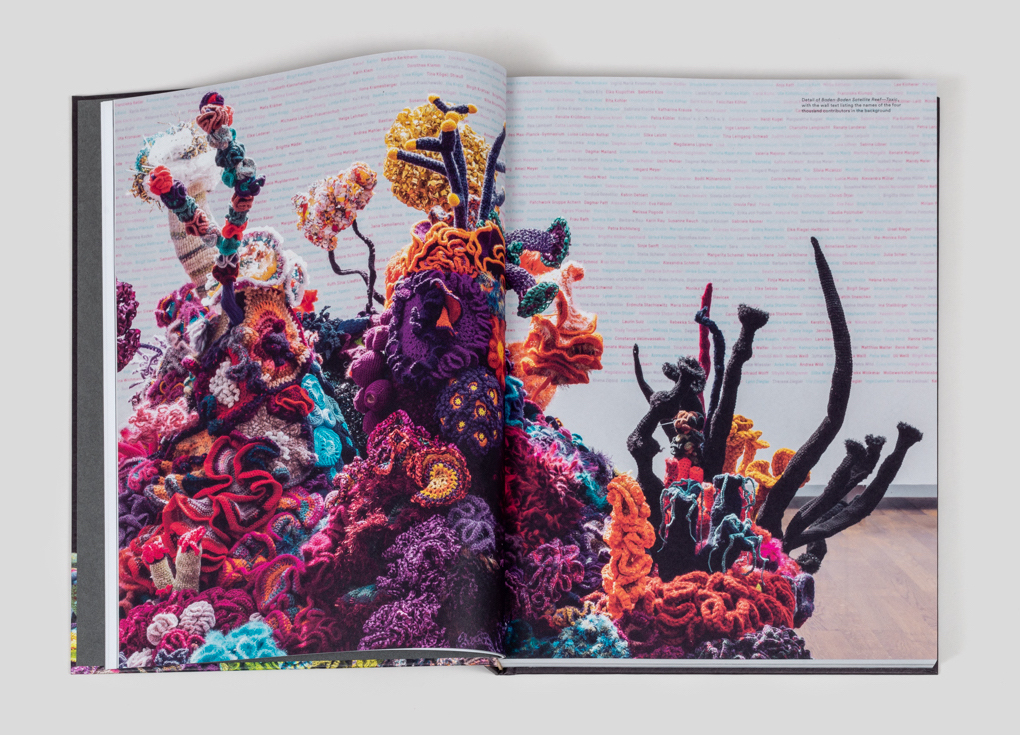
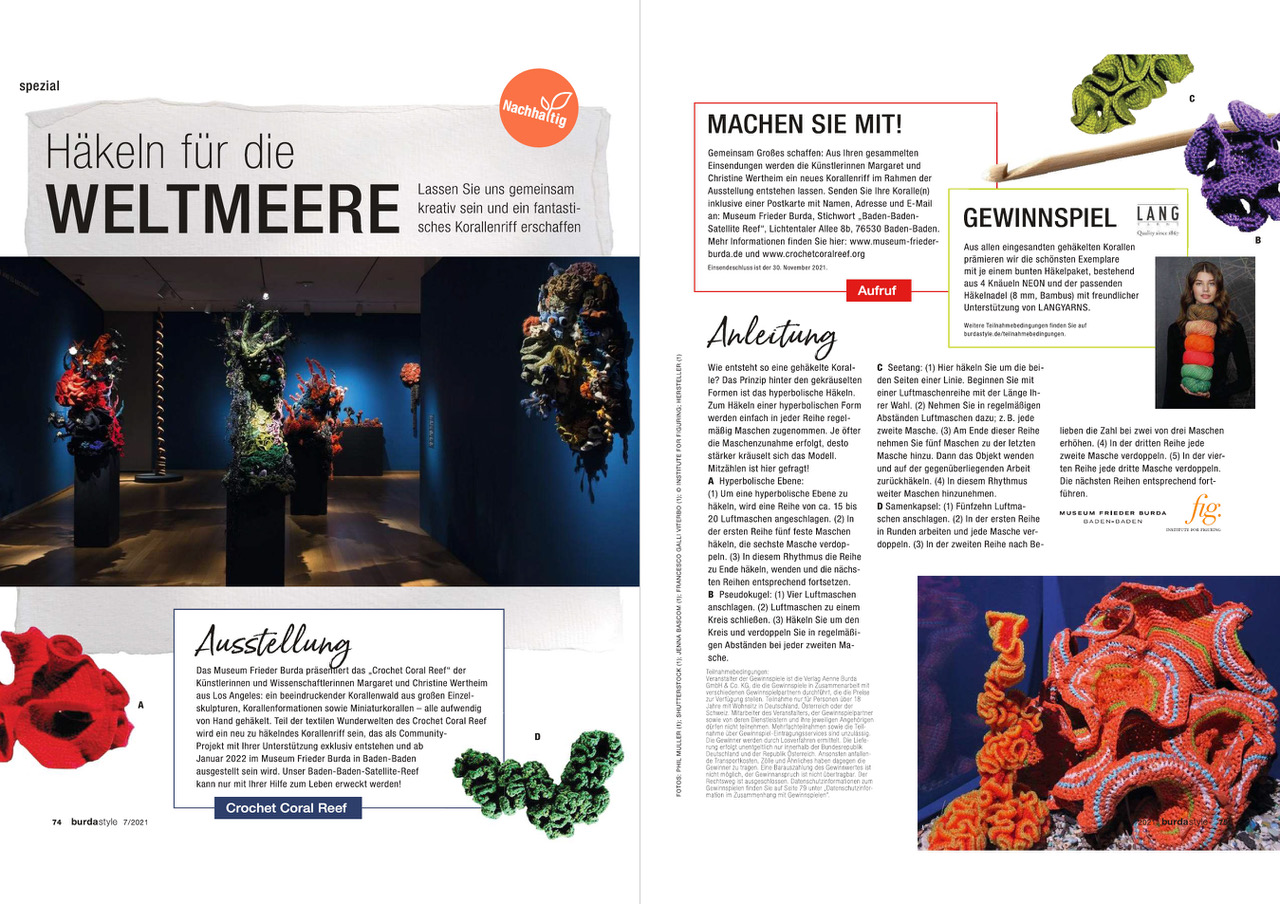
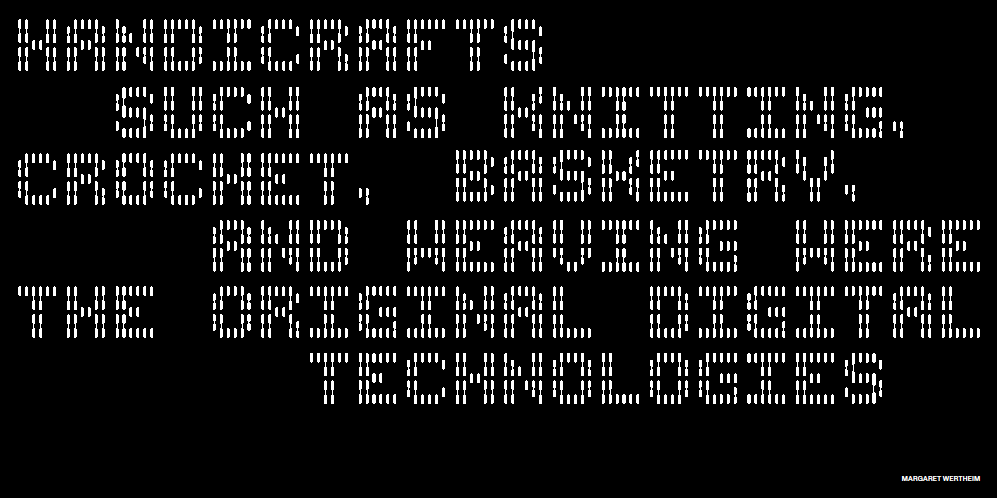
A beautiful catalog of the ArtCenter exhibition Seeing the Unseeable: Data, Design, Art is now published and includes an essay by IFF director Margaret Wertheim about the Crochet Coral Reef as an examplar of “vernacular science.”
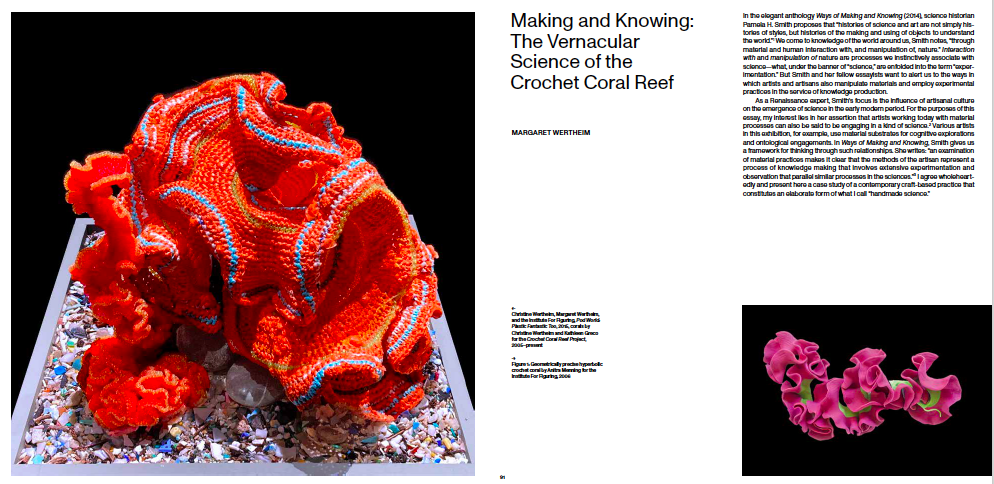
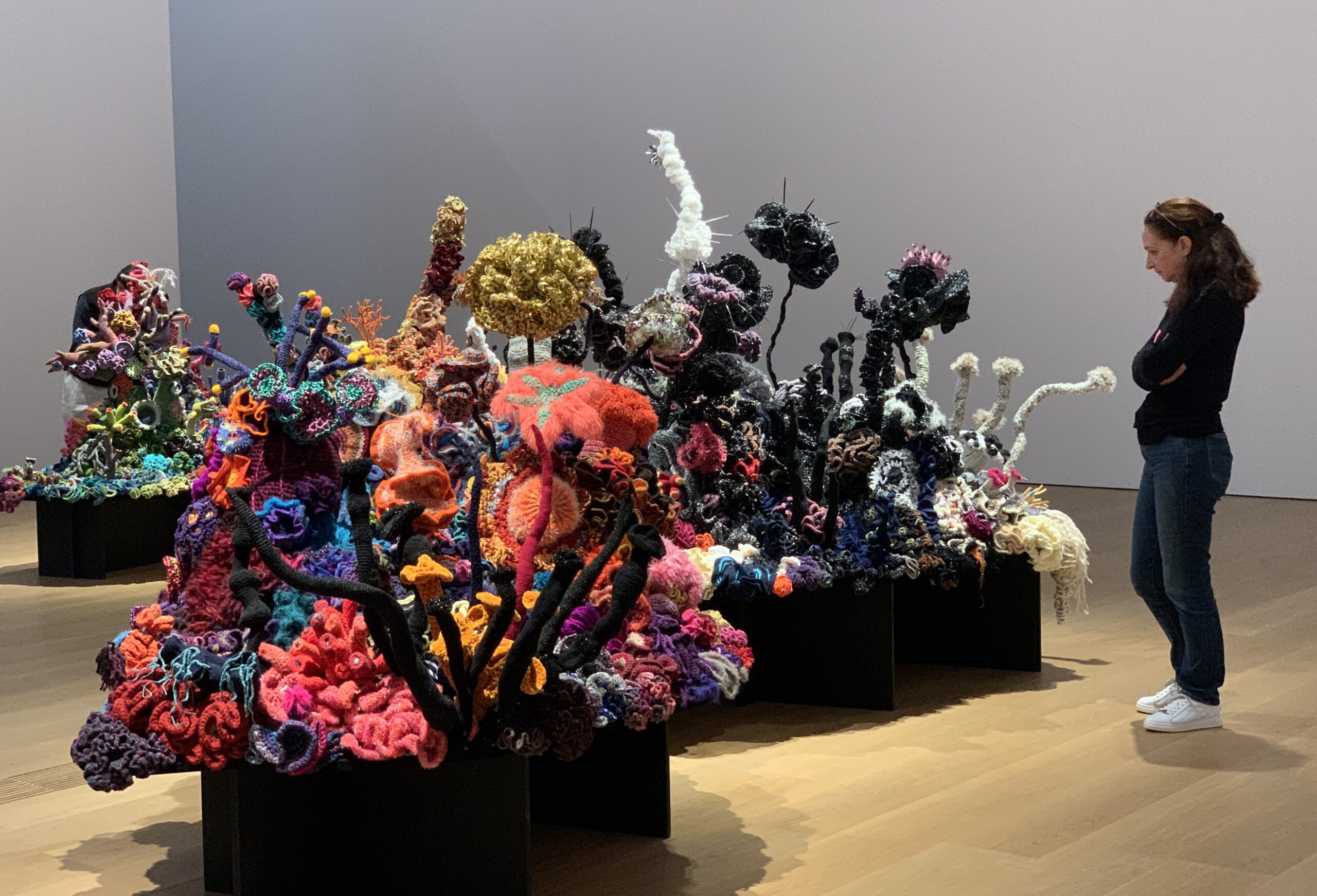
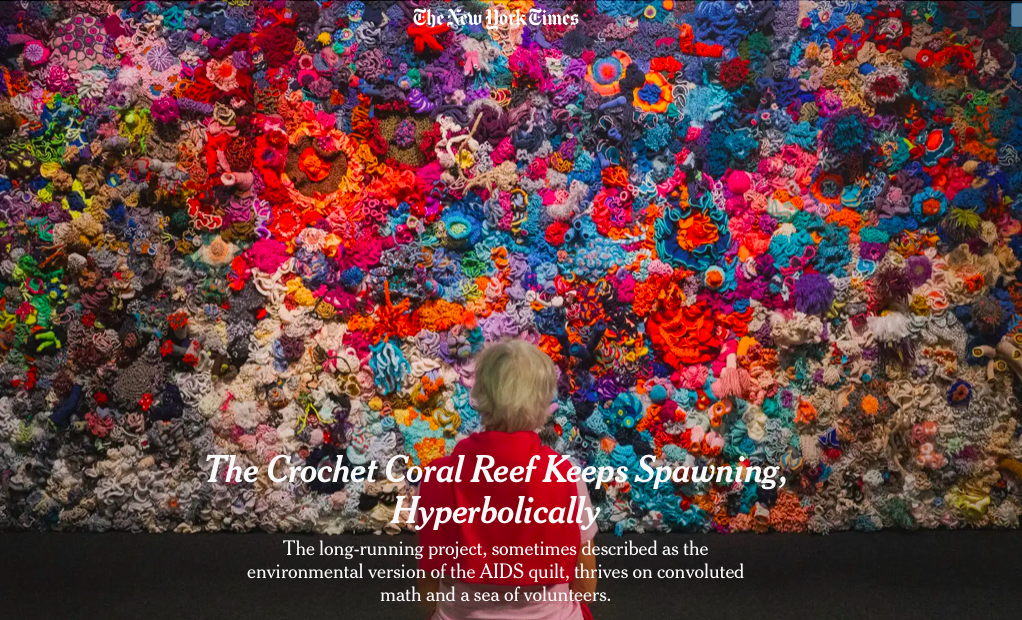
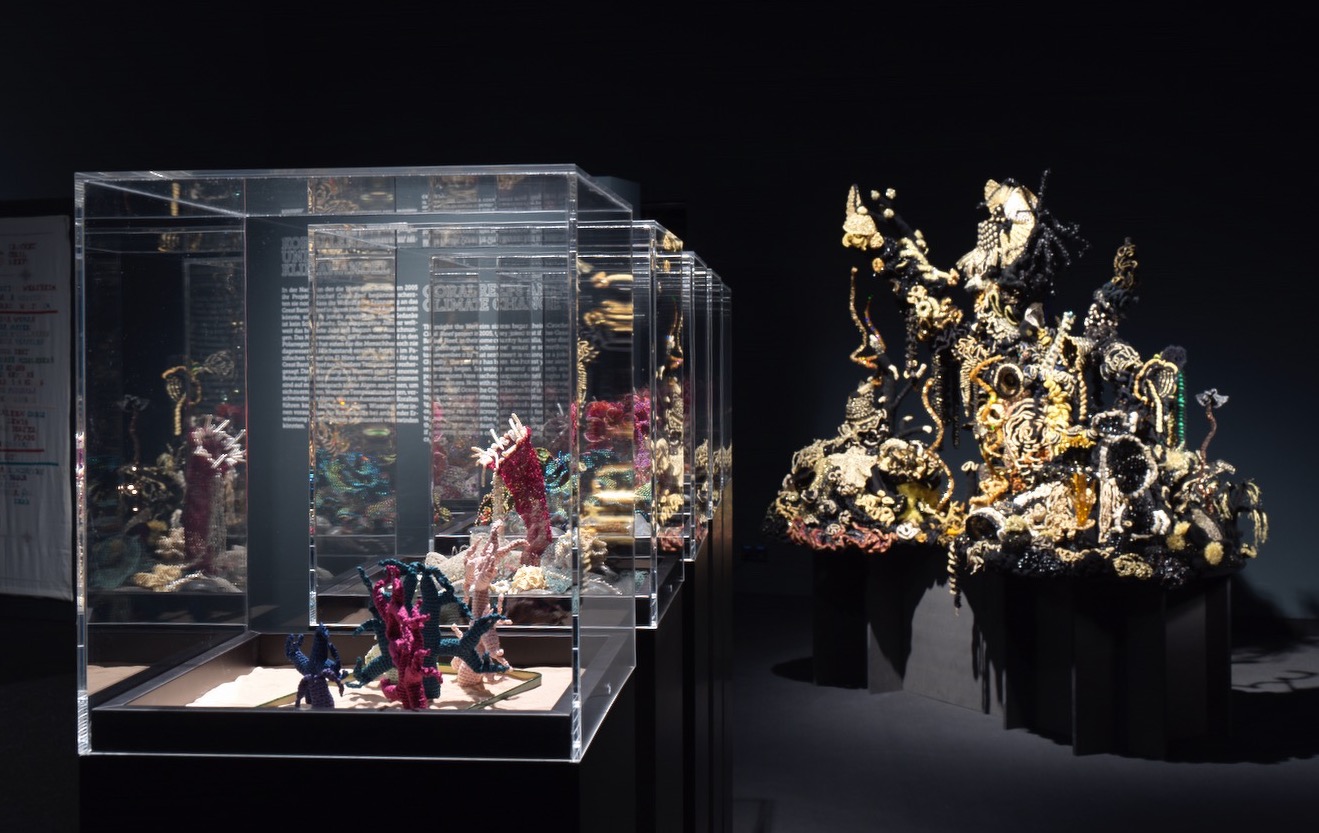
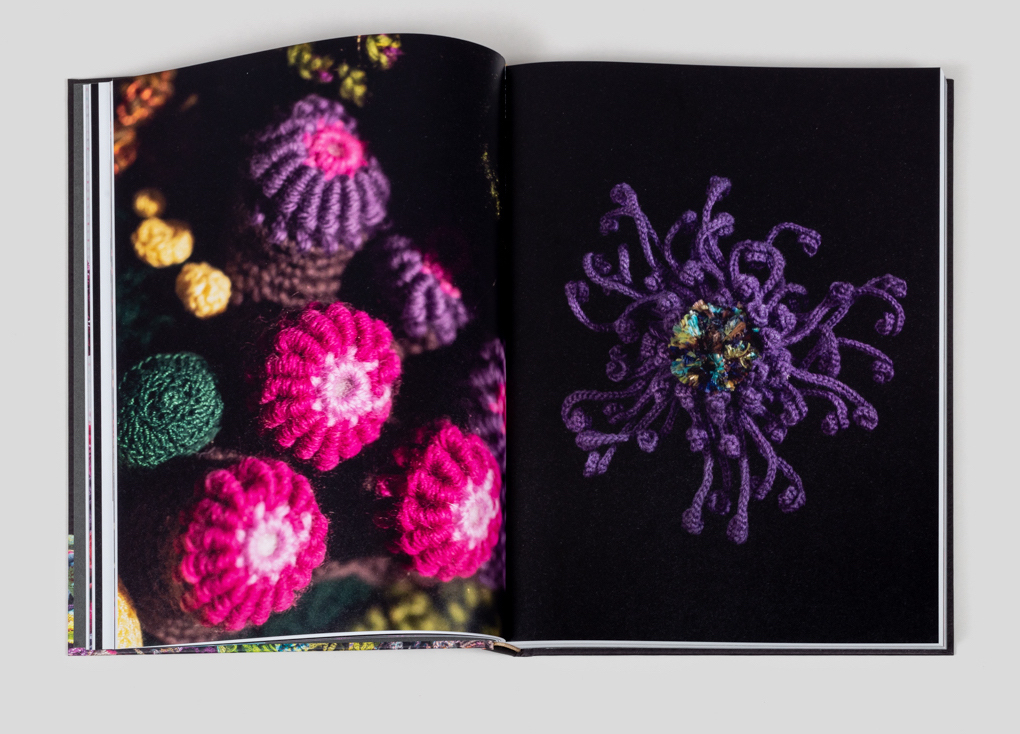
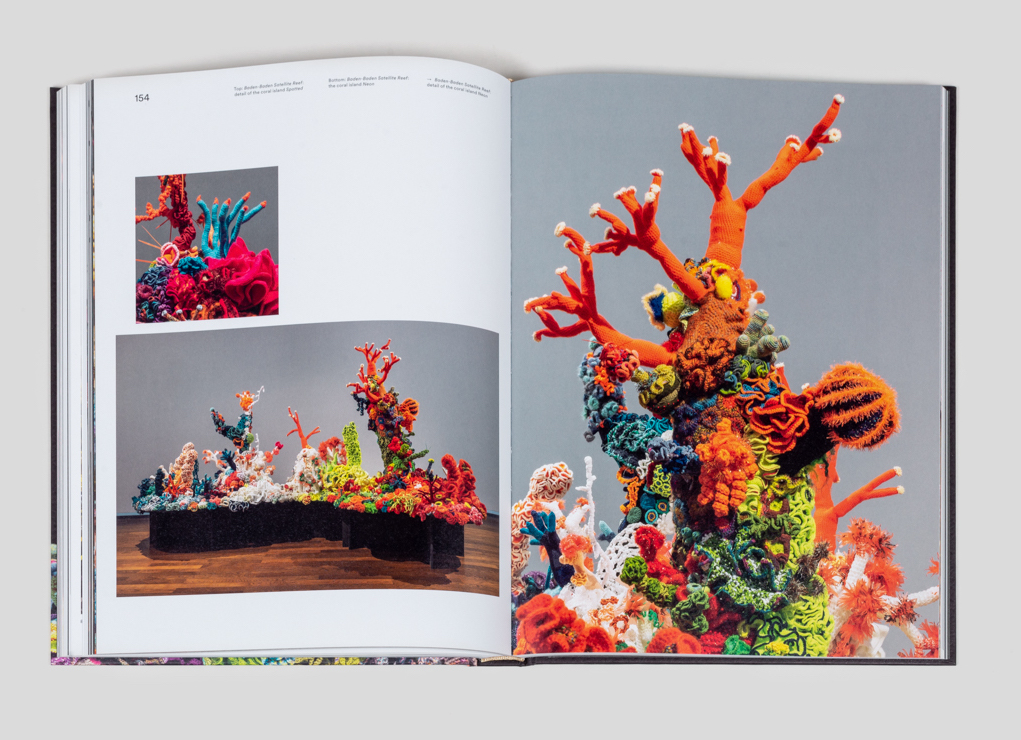
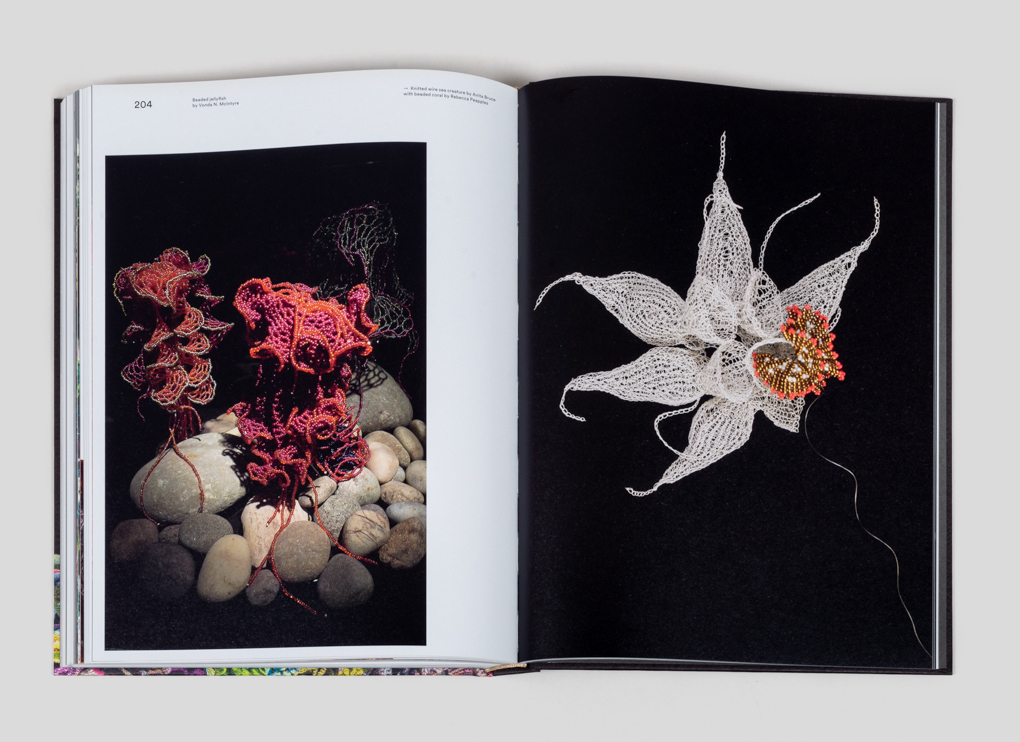
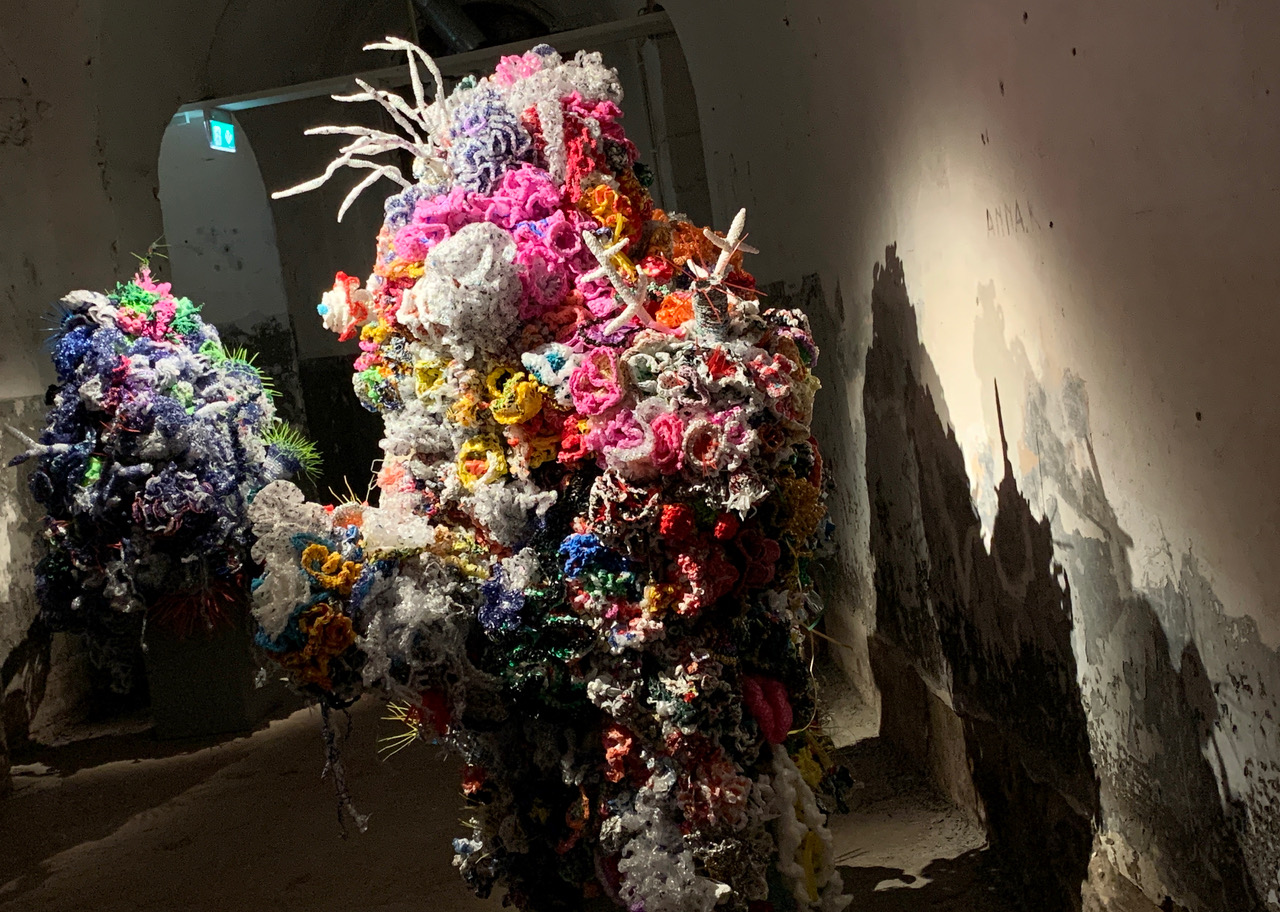
Seeing the Unseeable is an exhibition at the Williamson Gallery at ArtCenter College of Design held as part of the Getty Center’s PST ART: Art and Science Collide initiative during late-2024/early 2025, showcasing artists working around concepts connected to data. On show from the Crochet Coral Reef was a selection of our miniature coral Pod Worlds featuring superbly crafted hyperbolic forms by a selection of the project’s most skilled and imaginative contributors.
Exhibition Curators: Stephen Nowlin, Christina Valentine, Julie Joyce.
Ms Wertheim’s essay draws on ideas formulated by science historian Pamela H. Smith, who proposes that artisanal crafts-people in the early Renaissance contributed to the development of modern science through material explorations of natural processes – a contribution she sums up with the term “vernacular science.” Wertheim posits the Crochet Coral Reef crafting community as an extension of this tradition, and our explorations of hyperbolic space as a form of “vernacular mathematics.”
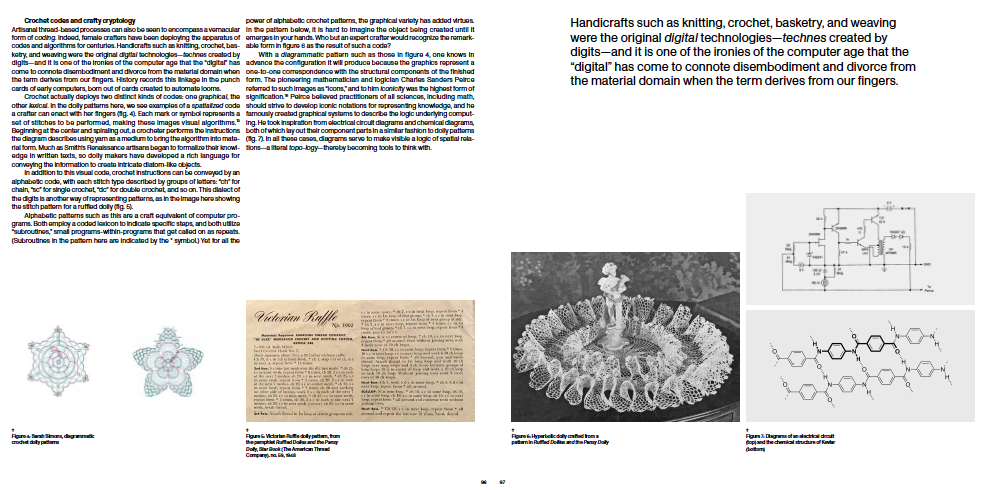
Essay Excerpt: The domestic frontiers of hyperbolic space
The discovery of “hyperbolic crochet” is attributed to Cornell mathematician Daina Taimina, who created such models as pedagogical tools for college-level geometry classes. Taimina’s brilliance was to identify how a humble craft could be employed to emulate a structure mathematicians had struggled to visualize for two hundred years. With crochet, she crafted models they could see and feel and manipulate in their hands…
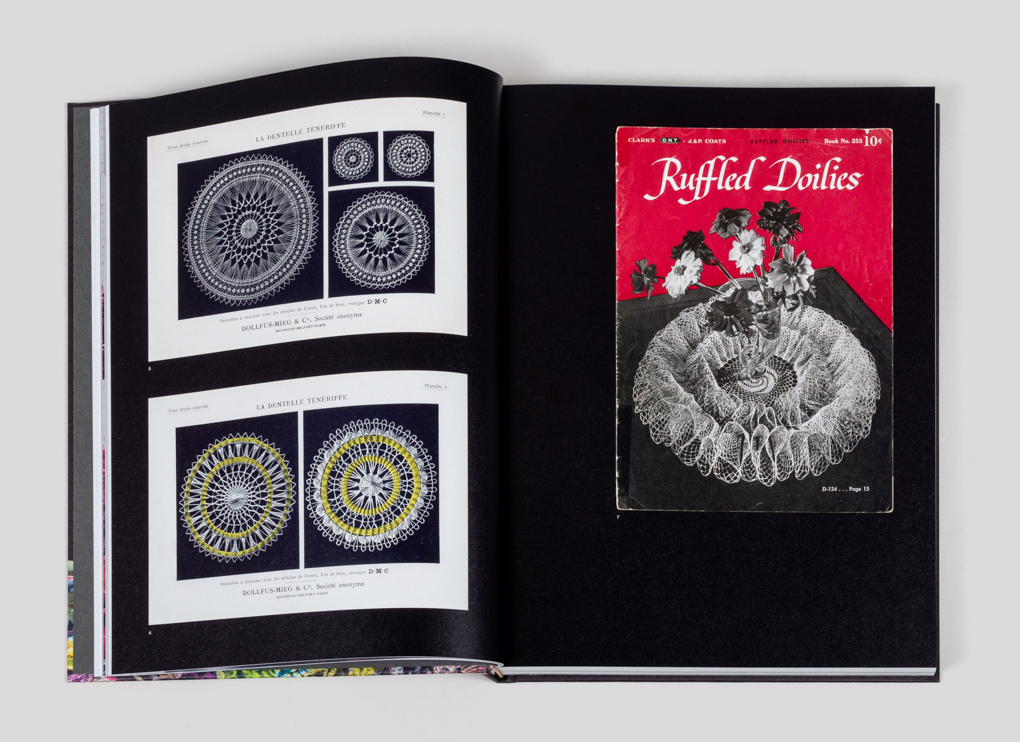
But if Taimina was the first to recognize the mathematics embedded here she wasn’t the first to construct such shapes—ladies crocheting doilies have been making hyperbolic surfaces for at least a hundred years. In the collection of doilies Christine and I own we have an exquisite piece of lacework from the nineteenth century with cascading layers of crenellated hyperbolic frills; plus a selection of 1940s pattern books for “ruffled doilies” features dozens of examples of hyperbolic edgings spelled out in stitch algorithms incorporating subroutines and other staples of computer-coding techniques. The “literate artisans” who wrote these patterns—and the women who reproduced the objects in their homes—had a clear understanding of how hyperbolic surfaces behave. Theirs was (and is) a mature form of material “knowledge making.”
Thus, in parallel with the academic study of hyperbolic geometry going on in university math departments, wives and maids at home were also developing an understanding of non-Euclidean concepts. Using what Smith calls “sensory tools of embodied experience,” ladies crocheting doilies have long been exploring the frontiers of hyperbolic space.
*
Crochet Coral Reef contributors featured in this exhibition: Nadia Severns, Anita Bruce, Kathleen Greco, Rebecca Peapples, Vonda N McIntyre, Sarah Simons, Lucilla la Villa Haviland, Heather McCarren, Unknown Chicago Wire Reefer, Margaret Wertheim, Christine Wertheim. [Plus book photo of model by Anitra Menning.]